The courage to start again

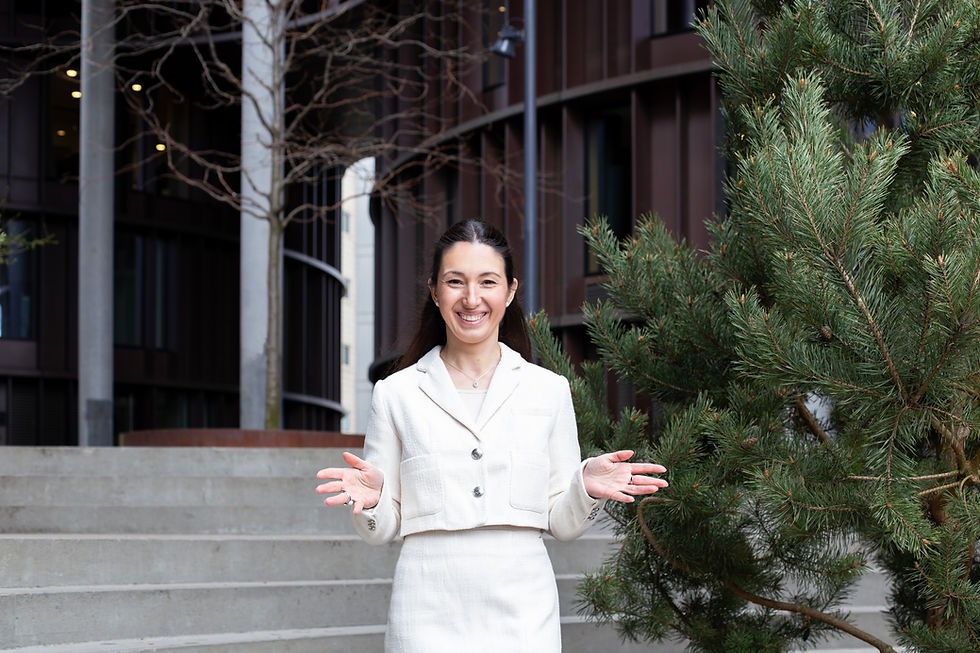
After 18 moves across three countries, Canadian-born teacher Makoda Gascon thought she knew a thing or two about starting over. Now, newly married and building a life in Denmark, she finds herself on the other side of the classroom – learning a new language, navigating immigration once again and discovering that home may be less about where you come from than where you choose to belong.
Photographs: The International
Text: Lyndsay Jensen
There is a moment in almost every international’s story when a new country stops being somewhere you are visiting and becomes something else.
Sometimes it happens slowly. A favourite café appears. You learn which supermarket has the things you like. The streets stop requiring Google Maps. Perhaps you even begin to understand why everyone suddenly disappears for three weeks in July.
For Makoda Gascon, the moment was more concrete.
She cancelled her return ticket.
After four previous visits to Denmark, Makoda arrived knowing that something was different. Her Danish partner was here. They had spent years building a relationship across borders, talking about careers, marriage, children and eventually closing the distance between them. Denmark was no longer simply her wife’s country.
It was where they wanted to build their life.
“I think the biggest moment was realising that I was refunding my return ticket and committing to making Denmark my new home,” she says.
For someone who has moved 18 times across three countries, you might assume another relocation would be relatively easy. But Denmark is proving to be a different kind of move.
Makoda has left behind a teaching career in Texas, her students, family, animals, friends and the comfortable knowledge of how everyday life works. She is learning Danish, navigating another immigration process and working out what her professional life might look like here.
For perhaps the first time in years, the teacher has become the student.

Home is where you make it
Makoda was born and raised in Canada, with family spread across the country. Her childhood included regular journeys between east and west and an early understanding that home did not have to mean one fixed geographical point.
She believes something stereotypically Canadian stayed with her: a willingness to talk to strangers and make people feel welcome.
“I always try to put in an active effort to be welcoming to others, just as I would want to be welcomed in any situation.”
Moving was already a regular feature of childhood, although change was not something she always welcomed.
“When I was younger, I struggled a lot to accept it because of the unpredictable nature of it,” she says. “Now, however, I feel that change is much more welcomed in my life.”
After high school, another possibility appeared. Makoda’s American stepfather could sponsor her move to the United States, and in 2017 she took the opportunity.
She first received temporary permission to work before gaining permanent residency through a green card. The experience gave her an early appreciation of how complicated immigration can be – and of the privilege involved in being allowed to become part of another country.
She also experienced very different versions of America.
Life in Las Vegas offered what she describes as a “capsuled” view of the United States, shaped by tourism and entertainment. Texas offered something completely different: rural life, along with an experience of being a linguistic and cultural minority.
The contrasts taught her something she has carried into Denmark.
“You can make friends anywhere that you go, even if they may have opposing viewpoints, lifestyles or backgrounds.”
Perhaps that is why Makoda does not see each move as replacing the person she was before. Canada did not disappear when she moved to America. America has not disappeared because she now lives in Denmark.
Each place adds another layer.

When the teacher becomes the student
Teaching was not an obvious childhood calling.
As a teenager, Makoda wasn’t sure what she wanted to do. Yet there were clues. She became a stage manager for children’s plays, helped lead Shotokan karate lessons and eventually worked as a teaching assistant.
She discovered she loved watching someone understand something because she had helped them get there.
A Bachelor’s degree in Elementary Education eventually led to a classroom of her own in Texas. Makoda spent her first year teaching first grade and her second teaching second grade, allowing her to continue with many of the same pupils.
Leaving them was one of the hardest parts of leaving America.
“Knowing that I wasn’t going to go to third grade alongside them, or at least be around them, hurt a bit,” she admits. “I feel that these first two years teaching will really stick with me.”
Her experience working with pupils for whom English was an additional language has taken on particular significance since arriving in Denmark.
During her student teaching in Texas, Makoda worked on a predominantly Spanish-speaking campus. Sometimes children could not express what they wanted to say to her in English. Then, she understood intellectually how intimidating language acquisition could be.
Now she understands it personally.
“There is a sense of uncertainty that I would never have when speaking English or even French,” she explains. “There is a hesitation or a worry that what you are going to say won’t be understood.”
She spent years encouraging pupils to try, make mistakes and keep learning. Now she has to offer herself the same patience.
Danish is going better than she expected, although pronunciation remains a challenge when a brain accustomed to English and French insists on applying the wrong rules.
One word has won her over: tallerken.
She likes the way it rolls off the tongue.
Love, distance and a one-way decision
Denmark entered Makoda’s life through the person who would eventually become her wife.
Even before their relationship became romantic, the pair discovered that their ideas about the future were remarkably similar. Both wanted to teach, travel, marry and have children.
When their friendship became a relationship, the conversation about eventually closing the distance started almost immediately.
They also knew it could not happen overnight.
Rather than putting their lives on hold, they continued pursuing their own goals.
“We made sure to attain our own personal goals and grow up together instead of rushing to be close physically.”
Makoda visited Denmark four times, gradually experiencing the country through her partner’s life and culture. Likewise, she shared Canada and America with her wife.
When it came time to decide where their future should begin, Denmark made sense.
They recently married in a civil ceremony, a day Makoda describes simply as “very much us.” Neither felt the need to create the perfect wedding according to somebody else’s expectations. What mattered was being married.
The same practicality shaped the move. They researched, planned and talked about realistic expectations before Makoda left the US to join her wife.
Now she is waiting for permission to remain here – a strangely familiar chapter for someone who has already experienced the American immigration system.
It is stressful and occasionally frightening, but experience has taught her that bureaucracy and belonging operate on very different timelines.
The paperwork may still be deciding where she can live.
Emotionally, the decision has already been made.
"Home is not necessarily the place where everything is easy. It can be the place where you decide the effort is worth making."

Learning Denmark from scratch
One of the things Makoda misses most about North America is surprisingly mundane: knowing how things work.
There is confidence in understanding a country without thinking about it – where to go, what something costs and how everyday systems operate.
Denmark has removed that expertise.
Even shopping required recalibration. Seeing prices in triple digits initially jolted her before her brain remembered that Danish kroner were not dollars.
There have been cultural surprises too. Public drinking took some adjustment after living in places where carrying an open alcoholic drink on the street would be prohibited. Danish family dynamics have also caught her attention; her own parents still message her almost every day.
One Danish feature, however, receives an enthusiastic endorsement: public transport.
Danes may complain about delayed trains and maintenance work, but after living in parts of North America where a car was virtually essential, Makoda has another perspective.
“I will take delays over having to drive everywhere any day.”
She is walking more too, and observing Denmark through the eyes of a teacher.
Makoda is particularly struck by the independence afforded to Danish children. She remembers similar freedoms from parts of her Canadian childhood but believes many North American children now grow up in a more cautious environment.
In schools where she worked, teachers worried about children climbing trees, sitting on top of monkey bars or playing with sticks.
“The natural sense of wonder of the world they live in was taken away from many students that I was around, which saddens me.”
In Denmark, she sees glimpses of that freedom still being protected.
It is one reason she can imagine raising children here.

Building a family between cultures
Makoda and her wife have always spoken openly about wanting children.
Her background in education has influenced what she values when imagining family life: nutrition, parental leave, freedom and the environment in which children are allowed to grow.
As members of the LGBTQ+ community, Makoda says Denmark’s relative acceptance was also part of their decision to settle here.
For Makoda, who identifies as pansexual, living in different places has taught her that acceptance and understanding are not necessarily the same thing. She does not want sexuality to define every interaction, while recognising the value of positive representation.
Mostly, though, the future she describes is wonderfully ordinary.
A home. Pets. Perhaps a few children. A career she enjoys. Peace.
And if those children eventually arrive, Makoda wants Canadian and American traditions to sit alongside Danish ones. She wants them to understand where both of their parents came from and build their own identity from those influences.
It reflects her approach to belonging.
“I think it is important to add parts of yourself into wherever you choose to call home.”
Integration, in Makoda’s version, does not require erasure.
She hopes to become fluent in Danish and perhaps one day gain Danish citizenship. But becoming part of Denmark does not mean becoming less Canadian or pretending America did not shape her.
Home can contain all three.
“I think it is important to add parts of yourself into wherever you choose to call home.”
The next lesson
Professionally, Makoda does not yet know exactly what Denmark will bring.
She hopes teaching will be part of it, but she is also open to writing, educational content, communication or something she has not yet considered.
“The great thing about being a teacher is that any profession will require some aspects of what I already love to do,” she says. “It is important to be open to what can be instead of being fixated on a specific career path for myself that may not exist in a new country.”
International relocation often encourages us to measure ourselves against the person we were before moving: the job title we had, the language we spoke effortlessly, the friends we could call and the systems we understood.
Suddenly, ordinary competence disappears.
Makoda is trying not to see that as failure.
Instead, she is learning perhaps the most difficult lesson she has ever had to teach herself: patience.
Without a definite timeline for her residence process, this stage can feel liminal. She sets weekly goals and tries not to punish herself when progress is slow.
Then she reminds herself that things take time.
It is advice she might once have given a nervous pupil.
Now she has to believe it herself.
After 18 moves, perhaps Makoda understands something the rest of us sometimes forget: home is not necessarily the place where everything is easy.
It can be the place where you decide the effort is worth making.
She still feels Canada’s pull. She misses the vastness and forests of Texas. Maple syrup remains non-negotiable – including, somewhat controversially, on salmon. America is part of her. Canada is part of her. Denmark is becoming part of her too.
Five years from now, she hopes the uncertainty will have given way to something far less dramatic: an ordinary life.
A house. Animals. Children, perhaps. Meaningful work.
And the feeling of finally being settled beside the person she spent so long waiting to live alongside.
For someone whose life has involved so much movement, her ambition is strikingly simple.
“I would have a nice career and just feel at peace.”
Perhaps that is what home ultimately becomes.
Not the country printed on your passport. Not the place where you were born. Not even the place you have lived the longest.
But somewhere you understand, respect and allow to change you – without asking you to leave every previous version of yourself at the border.
Makoda has been the Canadian, the immigrant, the American resident, the teacher, the person helping children find the confidence to speak in an unfamiliar language.
Now, in Denmark, she is the newcomer.
And this time, she is learning that beginning again does not mean going back to the beginning.
It means bringing everything you have already learned with you.