Connecting and taking initiative
- The International
- May 31
- 7 min read

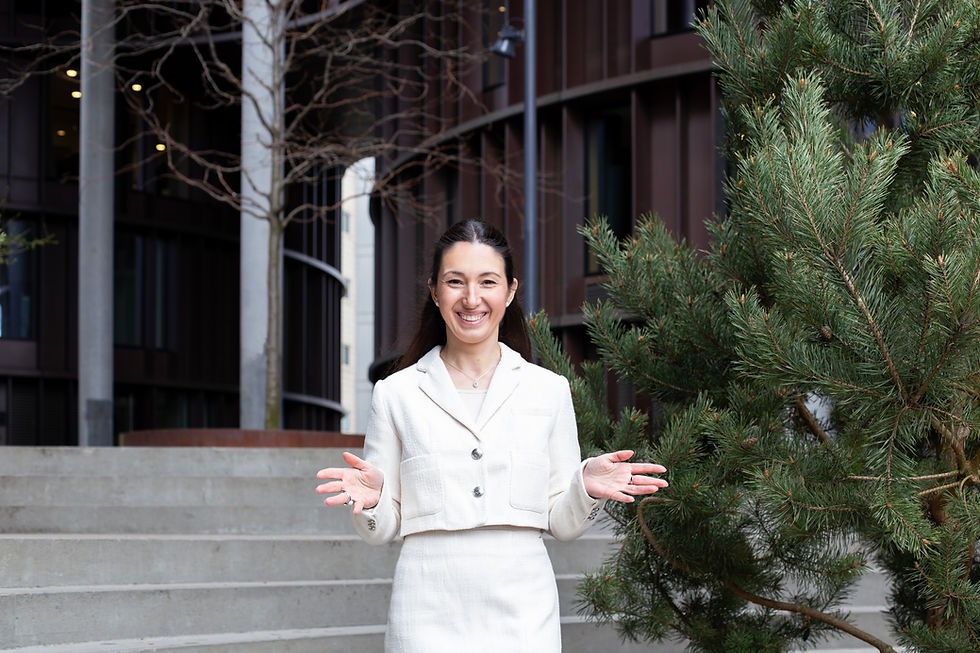
Being Irish and having already lived in several countries across the globe, Jess Hearne arrived in Denmark in 2018 after meeting a Danish partner while living in China. The relationship that first brought her here eventually ended, but her connection to Denmark stayed. Instead, over the years, Copenhagen became the place where she found a community, stability, and a sense of being a part of something that she had not experienced elsewhere.
Photographs: Maja de Silva
Text: Viggo Goris
Her journey has not been without challenges. Like many internationals, she has struggled with the Danish job market, navigated cultural differences, and worked to build a life away from home. Yet alongside those difficulties came beautiful friendships, personal growth, and the feeling of finally being rooted somewhere after years of movement. “I went from being a nomad to being very, very happily settled here.” Today, Denmark is no longer simply the country she moved to. It became the place she calls home.
Long before Denmark entered the picture, movement between countries had already become a familiar part of Jess’s life. Growing up between cultures taught her flexibility early on, but it also left her feeling never fully rooted in one place.
After finishing her studies in Ireland at 23, she worked for several years in executive assistance roles. Still, the routine quickly began to feel limiting. “I kind of felt like I needed a sense of adventure.”
At 26, she decided to leave Ireland and move to China to teach English. The experience gave her exactly what she had been searching for: change, challenge, and the excitement of discovering another culture. And yet it also unexpectedly led her towards Denmark.
While living in China, she met a Danish guy and eventually decided to move to Denmark to continue the relationship. At the same time, she wanted the move to stand on its own for herself, independent of romance. “I moved here to be with him, but I also needed a reason to come over for myself as well.”
To create that foundation, she enrolled in a master’s degree at the University of Southern Denmark in Odense. Although the relationship eventually ended, her connection to Denmark did not.
She eventually moved to Copenhagen, planning only to stay until she finished her studies before moving elsewhere. Instead, something unexpected happened. “I ended up falling completely in love with Copenhagen.” That feeling has remained ever since.

Danish friends
Arriving in Denmark was both exciting and overwhelming. Jess quickly built friendships through her studies, but the geography of those relationships created its own challenges. “My friends were either in Odense or Copenhagen, so I was constantly travelling around to be social.”
Living in Aarhus at the time, she also found it difficult to secure a job as an international. Compared to Copenhagen, the international community felt much smaller and opportunities more limited. And beyond practical difficulties, there were also cultural differences to navigate.
One of the biggest contrasts she noticed was the difference in interactions. “Irish people are very open and very talkative. You get on a bus, and there’s no hope of sitting quietly with your headphones in because someone will definitely talk to you.” Denmark felt almost opposite.
What surprised her more was how different her own experience of friendship was compared to the stories she often heard from other internationals. “I constantly hear from expats that they have difficulties making Danish friends, but that’s something I’ve never really experienced.”
While many of her friends are international, she also developed strong friendships with Danes. Rather than dividing people into the categories of ‘international friends’ and ‘Danish friends’, Jess approached social life differently.
“My goal was simply to make friends. No matter where people are from, you can always try to make an effort to find common ground.” That mindset became central to how she integrated into Danish society.

Connecting
Apart from her studies, much of Jess’s social network grew from her first job after moving to Copenhagen: working at an Irish pub in the city centre. “It became the starting point for so many connections.” Through colleagues, regular customers, mutual friends, volunteering, and previous jobs, her network slowly expanded over time.
She credits much of her experience to remaining open to opportunities. That openness also included taking the initiative socially. “Naturally, I’m a very decisive person. So I’m not afraid to organise things.” Volunteering and professional communities also became important parts of her life in Denmark.
She is also involved with Career Club DK as a member of its advisory board, where she has found both support and inspiration through the organisation’s network. These communities helped create what Jess now describes as her chosen family. “I’ve never felt that sense of belonging anywhere else in my life.”
From St Patrick’s Day to hygge
Over time, Denmark has influenced not only Jess’s routines but also her outlook on life. Some changes are simple. Danish food, for example, quickly became one of her favourite parts of daily life. “With cakes and frikadeller, I just can’t get enough of Danish food.”
Other changes have been more personal. For years, Jess worried that living abroad might distance her from her Irish identity. “One thing I felt in the past was a fear of losing my Irishness.” Living in Denmark gradually changed that perspective. “I realised that embracing another culture doesn’t mean losing another part of yourself. You’re just adding to it.”
At the same time, she was surprised by how strong the Irish community in Copenhagen is. “There are so many Irish people here.” Large St Patrick’s Day celebrations and friendships with fellow Irish internationals have helped her maintain that cultural connection. Rather than feeling divided between her identities, she now feels that both cultures coexist comfortably.
The process of settling in Denmark also came together with entering a different stage of adulthood. Having moved to Denmark at 28 and now being 36, she sees how both time and culture have shaped her priorities.
Jess became more focused on appreciating smaller moments and creating comfort in everyday life. Reading, in particular, has become one of her ways of slowing down. “The whole hygge lifestyle really plays into that.”
Denmark’s climate has also suited her personality surprisingly well. “I’m a winter girl through and through.” While many people complain about the cold and darkness, Jess finds comfort in it. “When everyone’s looking forward to summer, I’m just thinking, no, I want it to get cold and snowy again.”
"I realised that embracing another culture doesn’t mean losing another part of yourself. You’re just adding to it."

Knocking on closed doors
Despite building a fulfilling personal life in Denmark, one area has remained consistently difficult: employment. Like many internationals, she finds the Danish job market the most challenging aspect of living in the country.
Back in Ireland, the longest period she had ever gone without full-time employment was six weeks. In Denmark, however, finding stable full-time work has been a much longer and more exhausting process.
“There are a lot of times when I feel invisible.” Despite networking, volunteering, improving her skills, and following professional advice, progress often feels slow. “It feels like you’re constantly knocking on doors, but nobody’s home.”
Her professional background specialises in both executive assistance and written communication. While she remains interested in creative and journalistic work, she has increasingly focused on finding a job as an executive assistant, as such roles are more likely to lead to a stable career.
At the same time, she continues taking different opportunities where possible and stays involved in volunteer work that builds both experience and connections.
Throughout this period, maintaining momentum has become essential. “One thing I’m immensely proud of is that I’ve kept myself busy.” That determination is also central to the advice she gives other internationals struggling professionally. “Do your best to keep yourself busy. Take opportunities that help you build experience and avoid gaps in your CV.”
At the same time, she acknowledges the emotional difficulty of staying positive amid the uncertainty of job hunting. Trying to find a balance between optimism and rejection can be exhausting.

Taler du Dansk?
Language has also been one of the more challenging aspects of integration. While Jess quickly learned practical Danish through everyday necessities such as grocery shopping, speaking the language confidently took longer.
Today, she is enrolled in Danish classes and says she finally feels herself making progress. Her Danish boyfriend has also played an important role in encouraging her to practise speaking without fear of mistakes. Looking back, language is the one thing she wishes she had prioritised earlier.
“The only regret I have is not dedicating more time and energy to learning Danish sooner.” For internationals hoping to integrate, she believes language learning should be one of the priorities. “That will make your life so much easier.”
For people considering a move to Denmark, she offers practical but honest advice.
First, she stresses the importance of financial preparation. “You need to have a good amount of money saved up.” Because finding work can take far longer than expected, having a financial safety net can make the transition significantly less stressful.
She also encourages people to think carefully about what they want from Denmark. “Figure out what you want to get out of living here.” Some people may arrive intending only to study or spend a short period abroad, while others hope to build a permanent life. Understanding those goals early can shape how someone approaches integration, networking, and career building.
But most importantly, she encourages internationals not to hide their struggles. “No matter how used to moving abroad you are, it’s always hard.” Being honest about loneliness, uncertainty, or homesickness allows other people to offer support. “The beauty of having international friends is that everyone knows what you’re going through.”
For Jess, that shared understanding has become one of the most valuable parts of life in Denmark. Not because every problem disappeared, but because, for the first time, she found somewhere that truly felt like home.