Living with cerebral palsy in Denmark: stories of strength, struggles, and solidarity

Photographs: Courtesy of CP Danmark
Text: Anna Pawlowicz
October and World CP Day
Every October, people around the globe come together to mark World Cerebral Palsy Day—a moment to raise awareness of one of the most common physical disabilities in childhood, and to celebrate the strength, creativity, and resilience of people living with CP.
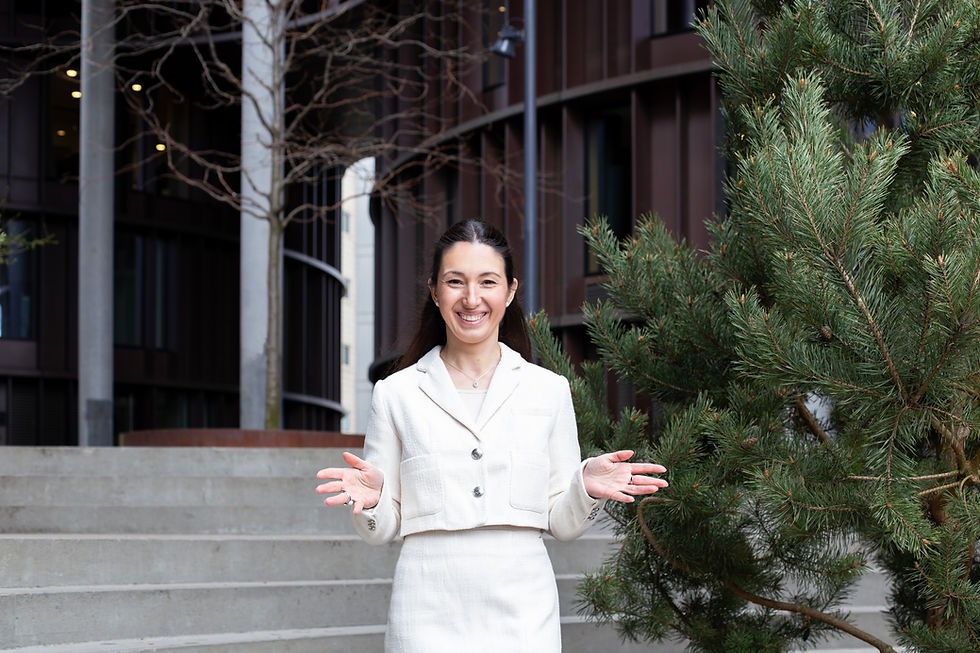
Here in Denmark, one organisation has been at the heart of this mission for 75 years: CP Danmark. I sat down with Pia Allerslev, the organisation’s chair, to discuss what cerebral palsy actually is, what life is like for families in Denmark, and why visibility matters.
What is CP, really?
When many people hear the term cerebral palsy, they picture a wheelchair, spasms, or speech difficulties. And while that is one way CP can present it, Pia explains that it’s far from the full picture.
“You can have someone who looks completely ‘typical,’ but struggles with fatigue, finding words, or cognitive challenges. Others may be in a wheelchair 24/7, unable to move independently - but with a mental sharpness far beyond ours.”
In short, you cannot judge a person’s abilities by what you see. CP is a spectrum, and every person’s experience is unique.
Denmark’s oldest CP organisation
Founded in the 1950s, CP Danmark began at a time when children with CP were not expected to live into adulthood. Today, members are thriving well, and this continues as they age. The organisation now supports over 5,000 members—people with CP, their parents, siblings, and allies—with everything from sports and cultural activities to legal guidance and psychological support.
CP Danmark is small in staff (just seven full-time employees) but mighty in reach, thanks to 14 local branches run almost entirely by volunteers. “That’s the soul of our organisation,” Pia says warmly. “Volunteers, families, and people with CP themselves—making sure no one stands alone.”
Challenges in the system
Denmark has a strong international reputation for disability support. But the reality for families can be far more complicated.
“One of the hardest things for new parents is simply not knowing where to go,” Pia explains. Families must navigate municipalities, hospitals, and endless paperwork—often while in shock from their child’s diagnosis.
Rejections are common, and complaints can drag on for months. Strikingly, up to 75% of municipal rejections are overturned when families appeal. “That shows the system is broken,” Pia notes. Instead of focusing on their child, parents spend precious time battling bureaucracy.
And these struggles don’t end in childhood. At 18, young people with CP must reapply for support as adults. At retirement age, the process begins again. Families face repeated cycles of proving, pleading, and pushing.
Why visibility matters
Despite these challenges, Pia insists that stories of strength are the best way to change perceptions.
She tells me about Tina, a lawyer with CP who realised that phone calls drained her energy. She asked her boss if she could split her week, with two days focused on calls and the rest on written work. Not only did this accommodation help Tina thrive, but her colleagues soon adopted the same pattern, improving work-life balance for everyone.
“What works for one can work for all,” Pia smiles. “That’s the beauty of universal design.”
Another story is Tobias, a young man with CP who dreamt of cycling across Denmark on his three-wheel bike. Pia joined him, and together they rode 600 kilometres from the south to Skagen. Later, with the support of Elsas Foundation, 30 people with CP cycled all the way to Paris. “We laughed, cried, and proved that limits are often only in people’s minds,” she recalls, her eyes shining.
A message to Denmark’s politicians
Pia is also clear-eyed about the changes needed at the policy level. Her message is simple: let people with disabilities contribute.
She recalls a young member who trained for years to become a social worker—only to be pressured by his municipality into taking an early pension before graduating. “Society paid for his education, but instead of letting him work, pay taxes, and live with dignity, they pushed him out,” Pia says. “We must stop wasting people’s potential.”
Becoming part of the community
For internationals in Denmark—whether parents of a newly diagnosed child, or simply people curious to learn more—joining CP Danmark is simple. Membership costs just 300–350 DKK a year. Anyone can join, with no paperwork required.
Members gain access to local and online activities, expert advice, and a community that understands. “Whether you’re a parent looking for guidance, an adult with CP seeking connection, or simply someone who wants to support inclusion—there’s a place for you,” Pia says.
Why it matters this October
World CP Day is not only about awareness, but also about belonging. Pia leaves me with one thought: “When people see only the challenges, they miss the joy, humour, and brilliance of people with CP. But when they see us biking, studying, laughing, and living—we change the narrative.”
In Denmark, CP Danmark continues to do just that. To learn more or become a member, visit CP Danmark’s website.