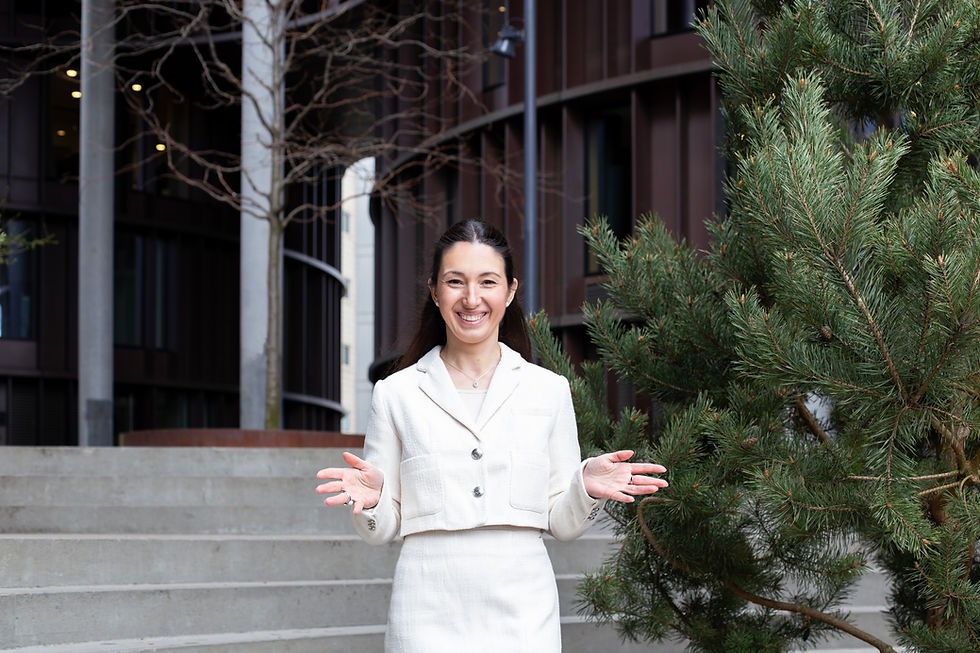
Baking a life, one cookie at a time

How a Houston-raised mother of four, Kimico Frydenlund, moved her family to Copenhagen - and why a small cookie shop made sense there.
Photographs: Maja de Silva
Text: Lyndsay Jensen
Raised in Houston, Texas, in a busy household shaped by proximity and routine. Siblings and cousins were constant presences, and family life unfolded in shared spaces. Kimico's mother worked as a nurse and raised the children alone for much of that time, setting a visible standard for responsibility and consistency.
“I grew up in a loving home surrounded by many siblings and cousins. My mom was a nurse and a single mother for much of my childhood. Watching her work hard and still provide us with a stable, comfortable life had a lasting impact on me.”
That environment established expectations early on. Work was not optional. Structure mattered. Family came first. These principles would later influence how she approached parenting, career decisions, and international moves.
Houston itself also played a role. As one of the most diverse cities in the United States, it exposed her early to different cultures, routines, and ways of living. That diversity felt ordinary rather than exceptional, and it shaped how she viewed difference later in life.
Food, hospitality, and cultural identity
What she remains most connected to from Texas is not a specific place but a way of interacting. In Houston, hospitality is embedded in daily life. Food is central, social, and shared.
“Hospitality and food,” she says. “I miss Southern charm - it simply doesn’t exist here in the same way. Houston is one of the most diverse cities in the US, and the food culture reflects that.”
Those early experiences continue to influence how she engages with people. Warmth, attentiveness, and directness are habits she carried with her when she moved abroad. They later became part of how she approached customer service and community life in Denmark.

Considering life beyond the US
Living outside the United States was something she had considered long before Denmark became part of her life. Australia was a serious option, and she had already begun imagining what it might mean to raise a family elsewhere. The idea felt possible, even if the details were unclear.
Denmark was not part of that early thinking. It entered her life through her relationship with Chris, whom she met online. Their connection developed easily despite living in different countries. Differences in nationality did not translate into differences in priorities.
Shared expectations around family life and long-term planning reduced uncertainty and made relocation feel practical rather than risky.
Moving to Denmark without a trial run
Her first experience of Denmark came in 2013, when she moved there directly. There was no extended visit beforehand. The couple settled in Aarhus, where they married and began building their life together.
The transition was smoother than expected. Denmark’s infrastructure stood out immediately. Public transportation was reliable. Parks and public spaces were accessible. Daily logistics felt organised and predictable.
“What stood out immediately was how clean, efficient, and family-friendly everything felt.”
That initial period in Denmark established a reference point that would later influence future decisions, even after the family returned to the United States.
Building a life back in America
After their time in Denmark, the couple relocated to the US, where they spent eight years. During that period, their family grew, and professional responsibilities expanded. It was also when she became a business owner.
She opened Mico’s Hot Chicken during this time. The decision was driven less by food than by a desire for independence. She had always wanted to work for herself, and entrepreneurship offered that opportunity.
Running a restaurant required long hours and constant involvement. It also meant learning how to manage staff, systems, and financial risk. The experience provided structure and income stability, which later made another international move possible.
"Copenhagen is literally my favourite city. With four children, it felt like a better environment to raise a family."

Deciding to return to Denmark
In 2023, the family moved back to Denmark, this time settling in Copenhagen. The move included four children, one of them a newborn. Unlike the first relocation, this decision was made with experience and clarity.
She had already lived in Denmark and understood how daily life functioned. Copenhagen, in particular, had become her preferred city.
“Copenhagen is literally my favourite city. With four children, it felt like a better environment to raise a family.”
The move required detailed planning. The family continued to own and operate their restaurant in Houston, which meant establishing systems that could function without their physical presence.
Managing work across borders
Stepping away from daily oversight of a US-based business was one of the more challenging adjustments. Distance changes how decisions are made and how control is exercised.
Operating across time zones required trust in staff and confidence in systems. It also reinforced the importance of clear processes. While the restaurant continued to operate successfully, the physical separation highlighted the limits of involvement from abroad.
At the same time, the move created space to consider new professional projects closer to home.
Starting something smaller in Copenhagen
After settling into life in Copenhagen, both she and Chris wanted a local workplace. They were not interested in replicating the scale or intensity of their restaurant business in the US.
She had wanted to open a cookie shop for years. Denmark felt like the right place to do it, provided the concept remained simple.
The result was Frydenlund Cookies, named after the family’s last name. The menu is intentionally narrow: a classic chocolate chip cookie, hot chocolate, and, later, ice cream. The focus is consistency rather than expansion.
The name choice was deliberate. Where Mico’s Hot Chicken carried her own name, this business was intended to represent the family as a whole.

Daily life behind the counter
Running a small shop has reshaped her daily routine. She works every day and prefers the predictability of the scale. The shop provides structure without the constant urgency of a larger operation.
Operating locally has also increased her interaction with the surrounding community. Customers return regularly. Other small business owners offer informal advice. A recent catering order came through from a parent at her child’s school, who shared the business with her workplace.
These connections developed through everyday interaction rather than formal networking.
Balancing American and Danish approaches
Living in Denmark has not prompted her to replace American habits with Danish ones. Instead, she is selective about what she adopts and what she maintains.
She does not attempt to alter Danish norms but is deliberate about preserving American-style customer service, including friendliness and attentiveness.
Parenting highlights some of the clearest contrasts. Danish children are often given independence earlier, while American parenting tends to involve closer supervision. Observing these differences has influenced how she thinks about responsibility and trust.
At home, certain American habits remain consistent: open communication, encouragement, ambition, and politeness.

Raising children across two countries
For the children, moving between Denmark and the US has been relatively straightforward. Travel between the two countries remains frequent, driven by the family’s business ties.
Family routines provide continuity. Friday movie night, complete with candy and snacks, remains fixed regardless of location.
For her children, Denmark is not something to compare or evaluate. It is simply where daily life happens.
Language and everyday integration
Learning Danish has been slower than expected. Because English is widely spoken, daily life does not require fluency. She can read and understand some Danish, but speaking confidently remains a goal.
She plans to prioritise language learning more actively as her children grow older.
Living abroad has reshaped how she defines home. It is no longer tied to a city or country, but to the people she lives with. Home, for her, is portable.
Looking ahead
Managing family life and businesses across borders has clarified her sense of capability. The experience of moving countries, raising four children, and building new routines has altered how she assesses challenges and opportunities.
When asked what living in Denmark has revealed to her, her answer is straightforward: that she is capable of more than she once assumed.
Looking ahead, her focus is on maintaining stability rather than accelerating growth. Building a family life that works alongside businesses designed to last - without rushing either - remains the priority.
For now, that balance is found in Copenhagen, one small shop, and a daily routine shaped as much by family life as by work.

Frydenlund Cookies is based in Copenhagen, serving classic chocolate chip cookies and hot chocolate. Find them at frydenlundcookies.dk and on Instagram @frydenlundcookies.