The classrooms in Denmark are changing

A new school year is underway, and Denmark is rethinking how children learn - and international families are part of the story.
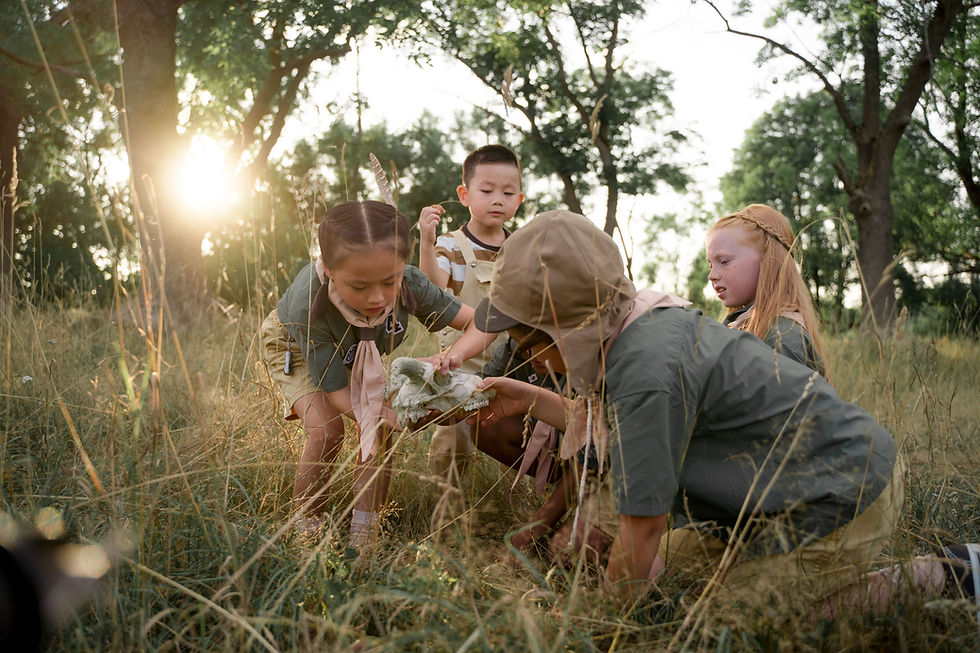
Photograph: CDC on Unsplash
Text: The International
Summer in Denmark has a habit of ending almost as quickly as it arrives. The summer houses begin to empty, offices refill, bicycles multiply on the morning commute, and children carrying school bags that somehow look almost as big as they are head through the school gates once again.
By September, the new school year is well underway.
For international families, those first weeks can bring a mixture of excitement and uncertainty. New words to learn - folkeskole, børnehaveklasse, SFO, Aula, forældremøde - and a school culture that may feel very different from what parents experienced.
But the 2026/27 school year is an especially interesting time to look at education in Denmark, because change is already happening in Danish classrooms.
A different approach to school
One of the first things international parents discover is that Denmark does not technically have compulsory schooling. It has compulsory education - undervisningspligt.
Children normally begin børnehaveklasse in the calendar year they turn six, and compulsory education lasts ten years. Most children attend the municipal folkeskole, but families can also choose a private independent school (friskole or privatskole) or, under certain conditions, educate their children at home.
Importantly for international families, compulsory education also applies to children living in Denmark, including those expected to stay in the country for at least six months.
Yet understanding Danish education requires more than understanding the rules.
The culture surrounding school can sometimes be the bigger adjustment.
Danish schools generally place considerable importance on independence, collaboration and participation. Children may address teachers by their first names, group work is common, and the relationship between home and school can feel surprisingly informal to newcomers.
And then, of course, there is Aula.
For many international parents, mastering Denmark’s school communication platform deserves to be considered an educational achievement in its own right!
“For an international child, school can be one of the first places where Denmark begins to feel like home.”
Changes are coming to the folkeskole
Something particularly significant is happening behind the scenes during this school year.
Denmark is currently developing entirely new subject plans for the folkeskole through a process called Fagfornyelsen.
The existing Fælles Mål will eventually be replaced by simpler subject plans intended to give greater emphasis to the essential content - or kernestof - that pupils should encounter within each subject.
Twenty-one subject committees, made up of teachers and subject-didactic experts, aredeveloping the plans.
The second drafts were published in June 2026, and schools are now actively testing them.
Until the autumn holiday, participating schools are trying the proposed plans in real classrooms and feeding their experiences back into the development process. Teachers, schools, experts and other interested parties can also submit feedback during an open consultation period running until 15 September 2026.
The final plans are due to come into effect from the 2027/28 school year.
In other words, today’s pupils and teachers are standing between two versions of the Danish folkeskole: the system families know today, and the one Denmark is trying to build for tomorrow.
New national tests are underway
Between 31 August and 25 September 2026, Danish public schools are conducting the new Folkeskolens Nationale Færdighedstest for the first time.
The tests are designed to give teachers an early picture of pupils’ academic strengths and areas where they may need additional support, particularly in fundamental skills such as reading, writing and mathematics.
The intention is for teachers to have this information near the beginning of the school year so they can adjust teaching according to pupils’ needs rather than discovering difficulties much later.
For international parents whose children are taking these assessments, however, it is worth remembering that language and academic ability are not always the same thing.
A child can be intelligent, curious and academically capable while still learning how to demonstrate that knowledge in Danish. That distinction matters enormously when children arrive from another educational system.
When your child is the international one
Moving country as an adult is challenging enough. Imagine doing it at nine, twelve or fifteen.
International children aren’t simply learning Danish vocabulary. They are learning humour, friendships, social rules and the countless unwritten codes that Danish children have absorbed without realising it.
Even something as simple as madpakke culture, cycling to school, class birthday traditions or understanding what happens during uge 42 can reinforce the feeling that everyone else received an instruction manual you somehow missed.
Schools therefore play an important role that extends beyond education.
For an international child, school can be one of the first places where Denmark begins to feel like home.
That makes inclusion important - not merely ensuring a child occupies a chair in a Danish classroom, but ensuring that they can participate, make friends, communicate and feel that their background is an asset rather than an inconvenience.
The same principle applies to children with disabilities and additional learning needs. Inclusion cannot simply mean being physically present. Real inclusion means having the support and accessibility required to participate meaningfully in school life.
Denmark still wants international students - but the picture is changing
The international dimension doesn’t stop at primary school.
Higher education is changing too.
More than 84,000 people applied for Danish higher education in 2026, although overall applications were down about two per cent compared with 2025. Interestingly, applications to welfare professions increased slightly, including nursing and social-work programmes.
At the same time, Denmark is changing its relationship with international students.
The number of international students admitted to English-language programmes based on foreign qualifications fell by 10 percent in 2026. Admissions from EU/EEA countries fell by 12 percent, while admissions from non-EU/EEA third countries fell by 13 percent.
Rules concerning students from third countries are also being tightened, with the government arguing that study residence permits must not become a back door into the Danish labour market.
Yet another development points in the opposite direction.
From 2027, Denmark’s professionally oriented higher-education institutions will be able to create 800 additional places on English-language STEM and IT programmes, and several new programmes have already been approved.
It highlights an interesting balancing act.
Denmark needs international knowledge and talent, particularly in sectors facing shortages, while debating how to manage international education and migration.
For those of us in Denmark’s international community, that is a conversation worth following.
More than ABCs and 1-2-3s
Perhaps the beginning of a new school year is the perfect time to remember that education isn’t confined to children sitting behind desks.
Internationals arriving in Denmark become students again in unexpected ways.
We learn how to pronounce rødgrød med fløde. We learn that an appointment at 10:00 means 10:00 - not 10:07. We learn the mysteries of MitID, cycling etiquette and Danish workplace culture. We discover that hygge is much harder to translate than the tourist brochures suggest.
And gradually, Denmark learns from us too.
Every international child entering a Danish classroom brings another language, another culture and another way of seeing the world. Every international researcher, teacher and student brings knowledge that crosses borders.
Perhaps that is the most interesting lesson as another school year gets underway.
Education is not simply about teaching people how the world already works.
At its best, it gives the next generation the confidence, curiosity and opportunity to imagine how it could work better.