Does outdoor learning work?
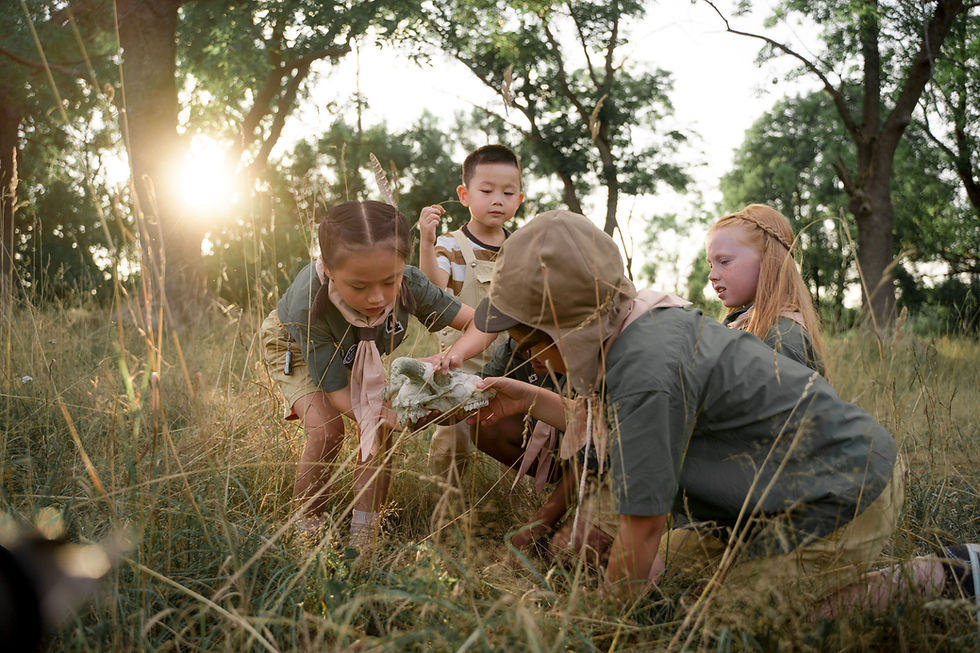
As nature-based education gains attention worldwide, Makoda Gascon explores how outdoor learning shapes the experiences of students across age groups.
Photograph: Pexels: Cottonbro Studio
Text: Makoda Gascon
For those unable to experience outdoor learning, or who anticipate their own children being part of it, what is outdoor learning, and how does it work for the youth of today?
What is outdoor learning?
The concept of outdoor learning is not new - it rests on the idea that students learn through their connection to and interaction with the outdoors. At its core, it is meant to be a way to gain a wholehearted understanding of nature. With this broad term, it can be helpful to understand how it is used in various ways depending on location and necessity.
Does it work?
While a definitive answer may be difficult to reach, as effectiveness is up to each individual to decide, there are many benefits to implementing outdoor learning. When it comes to interacting with nature, hands-on learning can be essential as students use their bodies to navigate and understand the natural world around them. At the same time, gaining meaningful experiences with others through outdoor interactions can help students build stronger connections with their peers. Furthermore, nature can be a good relaxer, providing an opportunity to reduce stress and promote mindful thinking. Follow along as we learn some ways outdoor learning has been implemented, so you can make a better judgment about whether it works from your viewpoint.
Forest schools
An interpretation of outdoor learning that may be more familiar in Denmark is the forest school, or skovbørnehave. This type of outdoor learning is mainly for younger grades, usually from preschool to kindergarten, and emphasises discovery over structured lessons or objectives. The idea is to have full immersion in nature, with the core focus on exploration and connection to their environment through play. At the same time, it helps students better understand risk management, as they have to learn to explore in ways that won’t harm or endanger them. If they do happen to get into a tricky situation, it can become a lifelong learning experience in which they slowly learn to better assess and protect themselves in their future adventures.
Outdoor classes
One approach that can be implemented across many grade levels is having classes outdoors. This can be particularly beneficial for a science class, where the curriculum can come to life through the use of actual natural parts. With outdoor classes, students can become the harbingers of their own learning, taking advantage of their surroundings to further their understanding of the subject matter. Besides science class, nature can be a great catalyst for lessons in other subjects, where students actively explore or use real-world objects and scenarios to understand the curriculum in new ways. During outdoor classes, students can take in their surroundings and understand that nature can be used for learning.
Outdoor education
For upper-grade levels, the concept of outdoor education may be one of the final stages of outdoor learning for a student. In this way, students learn to take part in activities that require the outdoors and hone skills that will make them successful while interacting with nature. For example, while I was in school in rural Canada, our high school offered outdoor education as an elective. This class focused on teaching us outdoor survival skills, such as how to make and light a fire with materials found in nature, how to enjoy the outdoors by taking long bike rides through the countryside, and how to use our skills on a final weekend-long camping trip. This way of connecting to nature matured to the level that we were via our grade level, and pushed us to see nature as a tool for survival and a source of endless beauty.
Educator standpoint
As an educator, I believe it is very beneficial for individuals of all ages to foster a relationship with nature and enjoy being outside. In a time when it is so convenient to stay inside, children must know it is okay to interact with nature and that they don’t need to be afraid of the world around them. Depending on how it is implemented, outdoor learning can significantly shape each person’s view of the world and help foster a strong bond with nature.