


The future of inclusive design

Inclusive design is often seen as complicated or expensive - but Viggo Gori explores how one Danish building is changing that mindset.
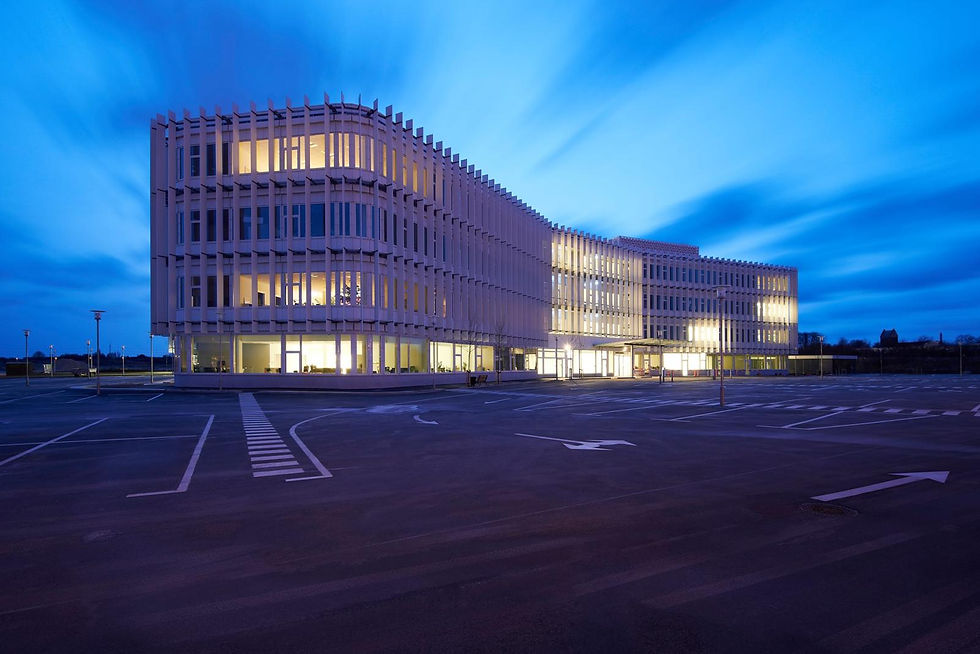
Photograph: Handicaphus press pictures
Text: Viggo Goris
Visiting the headquarters of Danske Handicaporganisationer in Høje Taastrup, I entered what is said to be the world's most accessible office building. Opened in 2012, the building was created around one central idea: making everyday working life accessible for people with all kinds of special needs and disabilities.
Completed in 2012, the building was created with one ambitious goal: to be accessible for people with all kinds of disabilities. Rather than designing for a specific group, the organisations behind the project had to identify common needs that could benefit everyone. According to Alexander, my guide who lives with ADHD and autism himself, this process was far from simple. Many disability organisations naturally wanted the building to be adjusted to their own members’ specific needs. Yet the project managed to shift the focus from individual solutions to shared necessities that benefit everyone.
Shared solutions
One of the most obvious examples is already visible at the reception desk. It is built on two levels, allowing both standing visitors and wheelchair users to communicate comfortably at eye level. It is a simple detail, but one that immediately reflects the philosophy of equality used throughout the building.
As the tour continued, more examples of thoughtful design appeared everywhere. Contrasting colours divide sections of the building, helping visitors navigate more easily. Elevators and staircases are always placed side by side, ensuring that nobody is separated in their movement through the building. There are multiple types of toilets to meet varying needs, while guide strips both inside and outside help visually impaired visitors find their way independently.
What makes the building even more fascinating is the process behind it. Alexander explains: “Architects and engineers were asked to experience disability themselves during the planning phase. Some navigated spaces blindfolded, while others attempted to move through buildings in wheelchairs.” The aim was not simply to teach technical needs, but to change the way designers think.
Changing the mindset
Katrine Mandrup Tang, the CEO of the Danske Handicaporganisationer, later reinforced that same idea. “The whole purpose of the house is not just to build a house in a universal design, but to affect architects and engineers in thinking that way.”
For Tang, the building proves that accessibility doesn’t have to be more expensive, but that mindset has to change. She pointed to small practical examples, such as coat hangers placed at usable heights, as reminders that inclusive design doesn’t necessarily cost more. “It’s not expensive or complicated at all, it’s just a way of thinking.”
“We describe the building as the most accessible office building in the world, something we are very proud of.” But she admits that, more than ten years after its opening, she hopes that might not be entirely true anymore and that the world is evolving.
Today, around 30 organisations work from the building, many of them relatively small with only a handful of employees. According to Tang, sharing one space creates significant benefits not only financially but also politically and socially. “As organisations representing different disabilities, we constantly learn from one another and broaden our perspectives beyond our own specific target groups.”

As an umbrella organisation representing 38 disability organisations across Denmark, it focuses on identifying common political goals rather than supporting only one disability group. Their work ranges from education and labour market policy to transport accessibility and social inclusion. Tang described their work as focused on engaging with decision-makers and building broad alliances across sectors, often collaborating with unexpected partners, such as cycling organisations, to improve accessible transportation.
Despite progress in physical accessibility, Tang believes society still has a long way to go in terms of mental accessibility. “Research shows that eight out of ten Danes feel insecure when meeting people with disabilities.” For her, this insecurity largely stems from a lack of contact rather than from unfriendliness. “If we don’t meet each other, then we don’t know enough about each other, and then there will be insecurity.”
That idea might capture the building's deeper meaning. It is not simply about elevators or guide strips. It represents a broader vision of an inclusive society where accessibility is no longer treated as a special adjustment for a minority, but as a natural part of everyday life for everyone.
Walking out of the building at the end of the visit, it became clear that the true achievement of Danske Handicaporganisationer is not just creating one of the world’s most accessible office buildings. - it is challenging people to rethink what accessibility, equality and inclusion should actually mean in modern society.


